Walking Toward Giants: A Trekker's Guide to the Annapurna Himalayas
The first morning I woke up in the Annapurna foothills, I unzipped my tent to a wall of cold, pine-scented air and a sky just beginning to blush pink. Somewhere above the clouds, a wedge of white stone caught the first light — Annapurna South, glowing like it had been lit from within. I remember standing there in my socks, coffee forgotten, thinking: this is why people fly halfway around the world. If you've ever scrolled through photos of prayer flags snapping against impossibly blue skies, or terraced hillsides cascading down to a roaring river, and felt a tug somewhere behind your ribs — that tug is the Annapurna region calling you. And the good news is, it's more reachable than you think.
Why Annapurna?
Nepal's Annapurna Conservation Area is the country's most popular trekking region for good reason: it packs an extraordinary range of landscapes and cultures into a relatively compact area. In a single trek you might pass through humid subtropical forest, rhododendron groves, terraced farmland worked by Gurung and Magar families, and finally stark, high-altitude terrain where yaks graze beneath glaciers. You don't need to be a mountaineer — you need sturdy legs, decent lungs, and a willingness to take things slow.
When to Go
Timing makes or breaks an Annapurna trek, so it's worth planning around the seasons.
Autumn (October–November) is the gold standard: crisp air, brilliant visibility, and stable weather, right after the monsoon has washed the dust from the sky. This is peak season, so trails and teahouses are busier, but the views are often unbeatable.
Spring (March–April) is a close second, famous for the rhododendron forests bursting into red, pink, and white blooms along the lower trails. Mornings tend to be clearer than afternoons, when haze can build up.
Winter (December–February) brings fewer crowds and startlingly clear skies, but high passes can be snowbound and temperatures at altitude plunge well below freezing — doable, but only for well-prepared trekkers.
Monsoon (June–September) is generally avoided for major routes; trails turn muddy, leeches appear, and clouds frequently obscure the views — though it can suit botany lovers chasing wildflowers in the rain shadow areas.
Choosing Your Route
Two classic options dominate the region, and both can be adjusted in length depending on your fitness and time:
Poon Hill / Ghorepani Trek (3–5 days) is the perfect introduction — a shorter, lower-altitude loop famous for its sunrise viewpoint over Dhaulagiri and the Annapurna massif, set among some of the most beautiful rhododendron forests in Nepal.
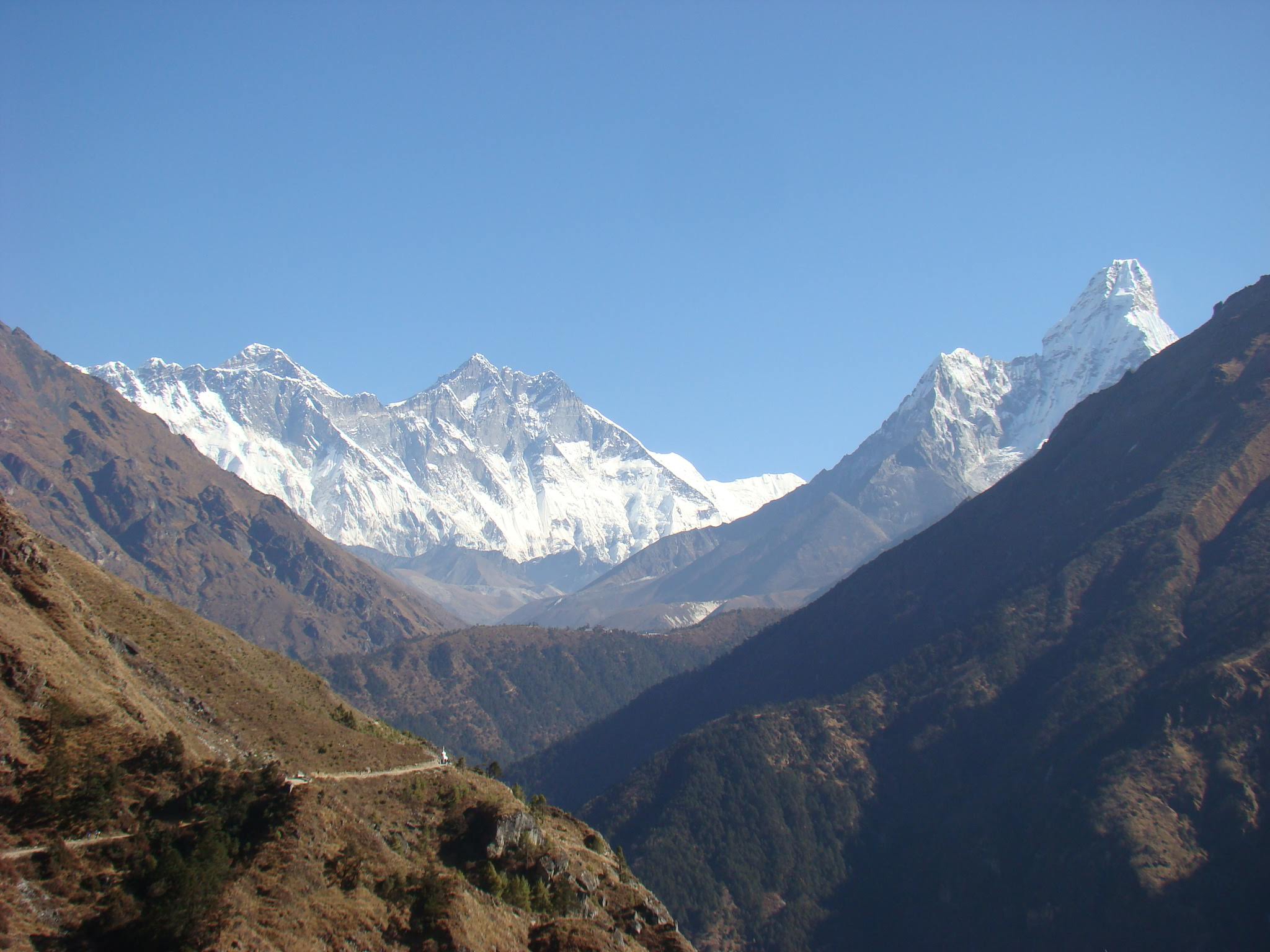
Annapurna Base Camp, or ABC (7–12 days), takes you deep into a natural amphitheater of peaks, climbing steadily from warm villages into an alpine bowl where Annapurna I (8,091m) and Machhapuchhre — the sacred "Fishtail" peak — rise almost directly overhead.
For this guide, let's walk through a 6-day itinerary that blends the best of both worlds: a Poon Hill warm-up followed by a push toward Annapurna Base Camp's lower approach, ending with a soak in natural hot springs. (Many trekkers extend this to the full ABC route if time allows.)
A Day-by-Day Outline
Day 1 — Pokhara to Tikhedhunga / Ulleri: A scenic drive from lakeside Pokhara drops you at the trailhead, and almost immediately the trail begins to climb — sometimes via thousands of stone steps built by hand over generations. Expect to pass through villages where chickens scatter underfoot, prayer wheels spin lazily in courtyards, and the smell of woodsmoke drifts from teahouse kitchens. By evening, your thighs will know exactly how many steps you climbed.
Day 2 — Ulleri to Ghorepani: The trail winds upward through increasingly dense rhododendron and oak forest. In spring, this stretch turns into a tunnel of pink and crimson blossoms; in autumn, the forest floor is carpeted in fallen leaves, and the air smells of damp earth and pine resin. Ghorepani, perched at around 2,850 meters, offers your first proper mountain panorama and a cozy teahouse with a wood stove to thaw out your fingers.
Day 3 — Sunrise at Poon Hill, then on to Tadapani. This is the day people fly across the world for. You'll wake at an ungodly hour — headlamps bobbing in the dark — and climb forty-five minutes to Poon Hill's viewpoint. As dawn breaks, the entire Annapurna range ignites in shades of orange and pink, with Dhaulagiri's massive bulk to the west and Machhapuchhre's dramatic fishtail summit to the east. After breakfast, the trail dips into thick forest again toward Tadapani, where langur monkeys sometimes crash noisily through the canopy overhead.
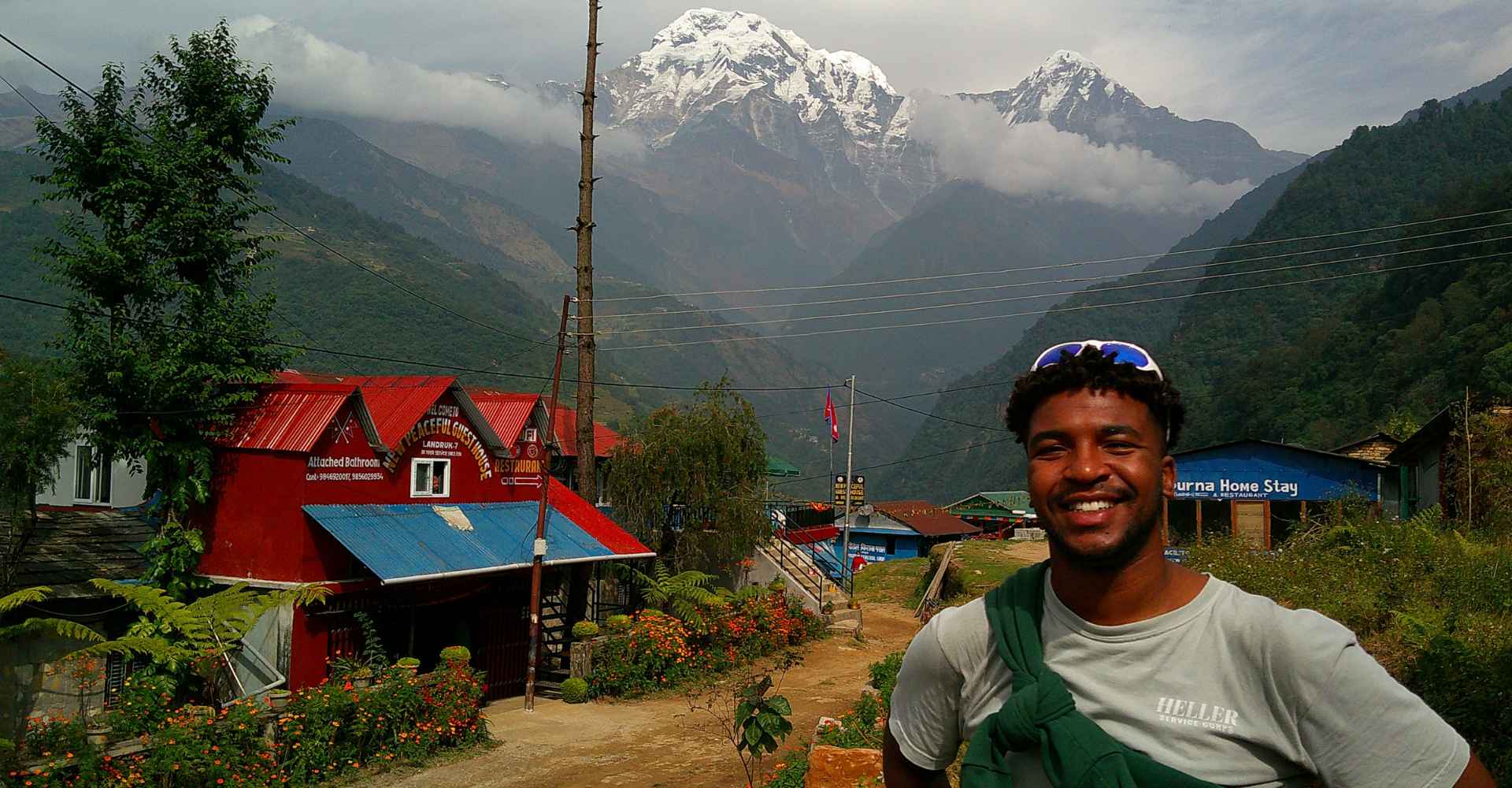
Day 4 — Tadapani to Chhomrong. Today the landscape shifts character. Descending through forest, you'll cross a swinging suspension bridge over a river gorge, then climb into Chhomrong — a picturesque Gurung village with stone houses, terraced fields, and your first close-up view straight up the valley toward Annapurna South and Machhapuchhre, which now feels close enough to touch.
Day 5 — Chhomrong toward Sinuwa / Bamboo: The trail descends steeply via stone steps into a deep, narrow valley, then climbs again through bamboo and rhododendron forest. The temperature noticeably drops, the air gets thinner, and the vegetation shifts from subtropical to something closer to a temperate rainforest — mossy, dripping, and atmospheric. This is also where many trekkers begin to feel the effects of altitude for the first time, making it an important acclimatization stretch.
Day 6 — Descent toward Jhinu Danda and Hot Springs: Whether you continue onward toward Annapurna Base Camp itself (adding several more days) or begin looping back, a stop at Jhinu Danda's natural hot springs is non-negotiable. After days of climbing, sinking into warm river-fed pools with the sound of rushing water and the silhouette of forested ridges above is pure bliss — arguably the best-earned bath of your life.
Scenery, Culture, and Challenges
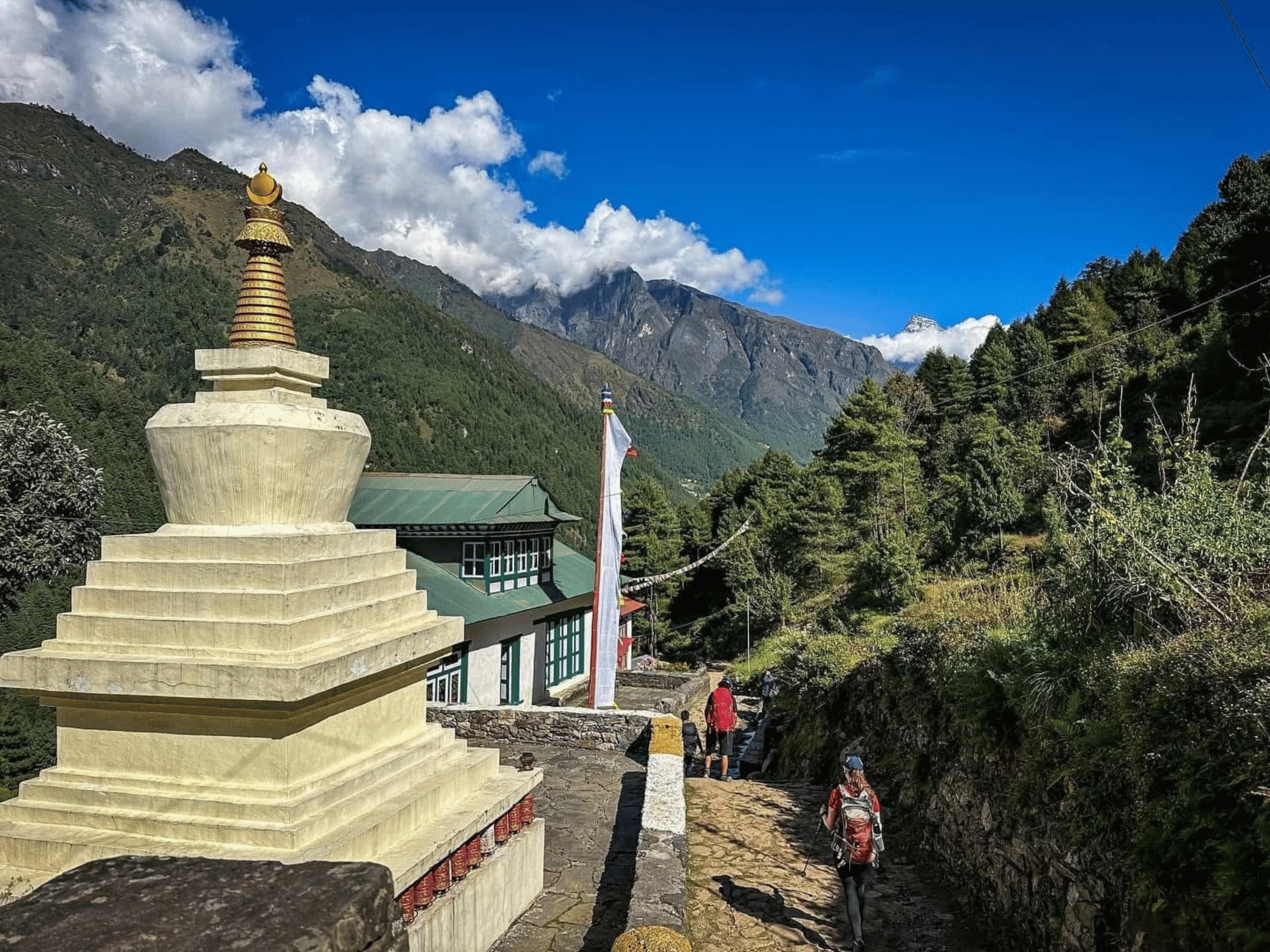
Beyond the headline mountain views, what stays with most trekkers is the rhythm of village life along the trail: mule trains carrying supplies with bells jingling, kids walking to school in bright uniforms, elderly women spinning prayer wheels as they pass, and the warm hospitality of teahouse owners serving steaming bowls of dal bhat. The Annapurna region is home to Gurung, Magar, and Thakali communities, each with their own customs, and you'll often see Buddhist chortens and mani walls alongside Hindu shrines — a reflection of Nepal's layered spiritual landscape.
That said, it's not all postcard moments. Long uphill stone staircases are relentless on the knees and lungs. Altitude can cause headaches, fatigue, or nausea even on relatively "easy" treks if you climb too fast. Weather can turn quickly, especially near passes. And teahouse amenities — while charming — are basic: cold rooms, squat toilets, and limited charging are part of the experience.
Practical Tips
Permits: You'll need a TIMS (Trekkers' Information Management System) card and an Annapurna Conservation Area Project (ACAP) permit, both obtainable in Kathmandu or Pokhara — bring passport photos and your passport.
Acclimatization: Even on lower routes, drink plenty of water, eat well, and resist the urge to rush. If anyone in your group develops a worsening headache, dizziness, or breathlessness at rest, the only real remedy is to descend.
Packing: Layers are everything — a moisture-wicking base, a warm fleece or down layer, and a waterproof shell. Sturdy, broken-in boots, trekking poles (your knees will thank you on the descents), a good sleeping bag rated for near-freezing temps, a headlamp, water purification tablets or a filter, and sun protection (the UV at altitude is fierce even when it's cold) round out the essentials.
Guides and porters: Hiring a local guide or porter isn't just about convenience — it supports local livelihoods, adds invaluable cultural context, and significantly improves safety on routes with changeable weather.
Sidebar: Trekking Lightly, Trekking Well
The Annapurna trails see hundreds of thousands of visitors each year, and that traffic has real consequences. A few small habits make a big difference: carry a reusable water bottle and use purification methods instead of buying plastic bottles (which are difficult to recycle here); stick to marked trails to avoid eroding fragile slopes; dispose of waste properly, packing out what you can't burn or compost; and choose teahouses and guides that are locally owned, so your money stays in the communities you're passing through. Respecting local customs — modest dress near temples, asking before photographing people, and a friendly "Namaste" — goes a long way too.
Coming Down the Mountain
There's a particular kind of quiet that settles over you on the final descent — legs tired, skin sun-and-windburned, boots caked in dust, but something inside recalibrated. The mountains don't care about your deadlines or your inbox; they simply exist, immense and indifferent, and somehow that's exactly the perspective most of us need. Whether you make it as far as Poon Hill's sunrise or all the way into the amphitheater of Annapurna Base Camp, you'll come home carrying something the photos can't quite capture — the smell of woodsmoke, the ache in your calves, and the memory of a sky so clear it felt like you could reach out and touch the stars. Pack your boots. The trail's waiting.